

Globaly
Ontario, CanadaInternational (EN / FR / ES)
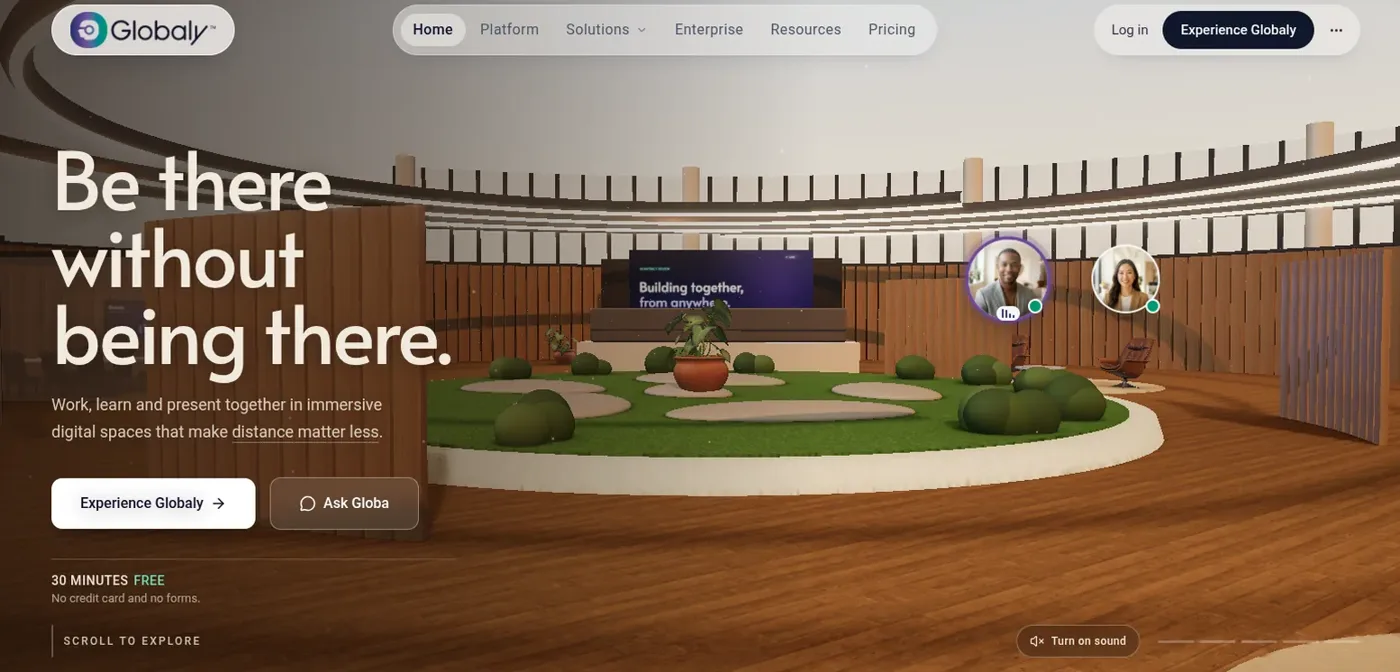
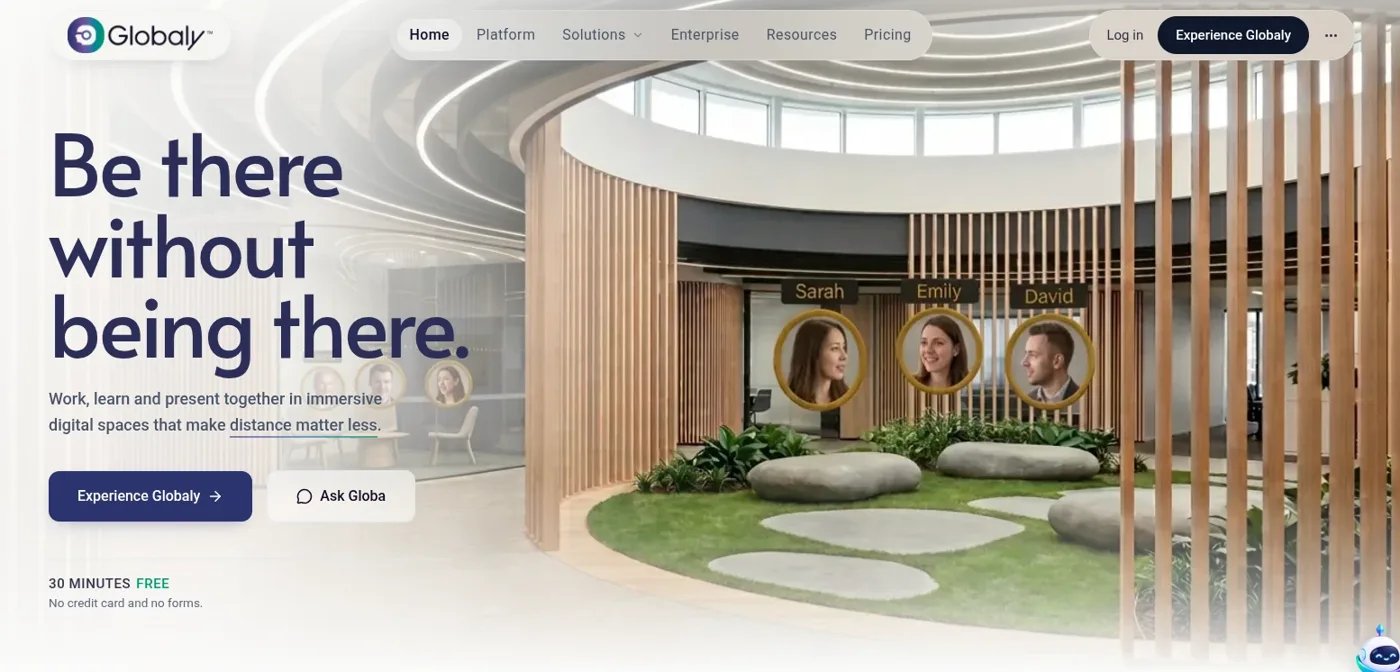
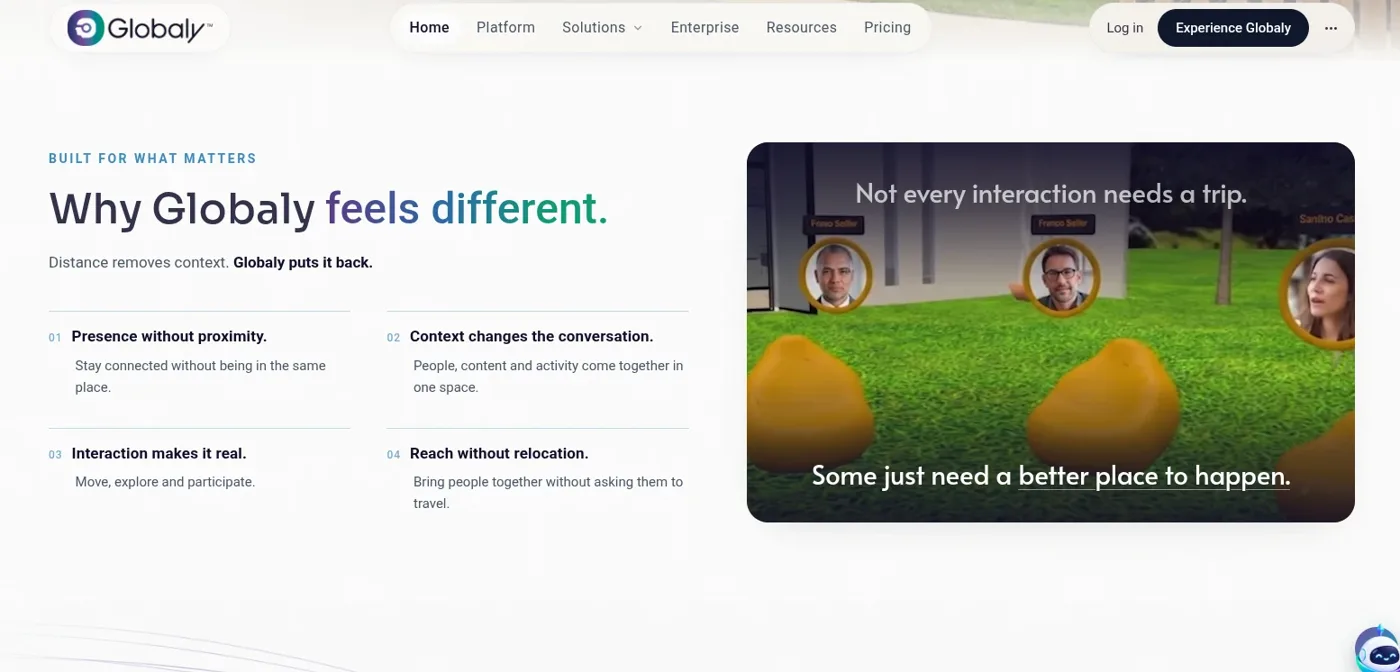
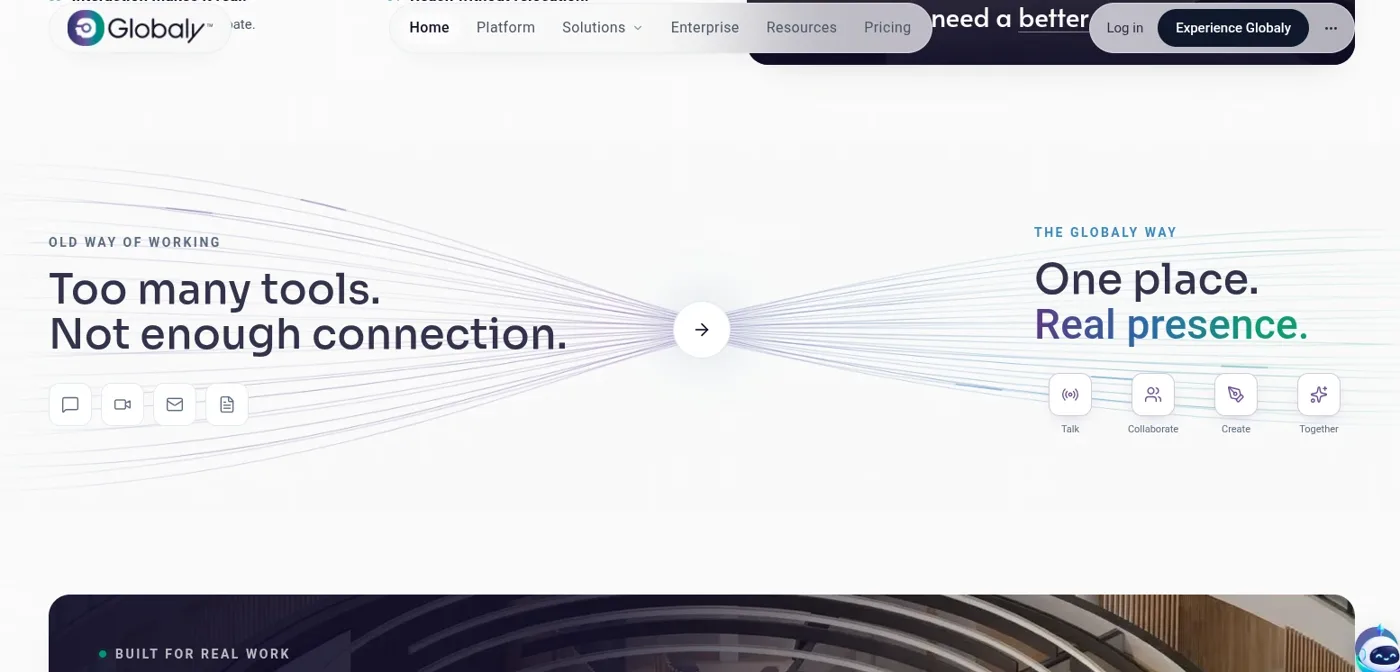
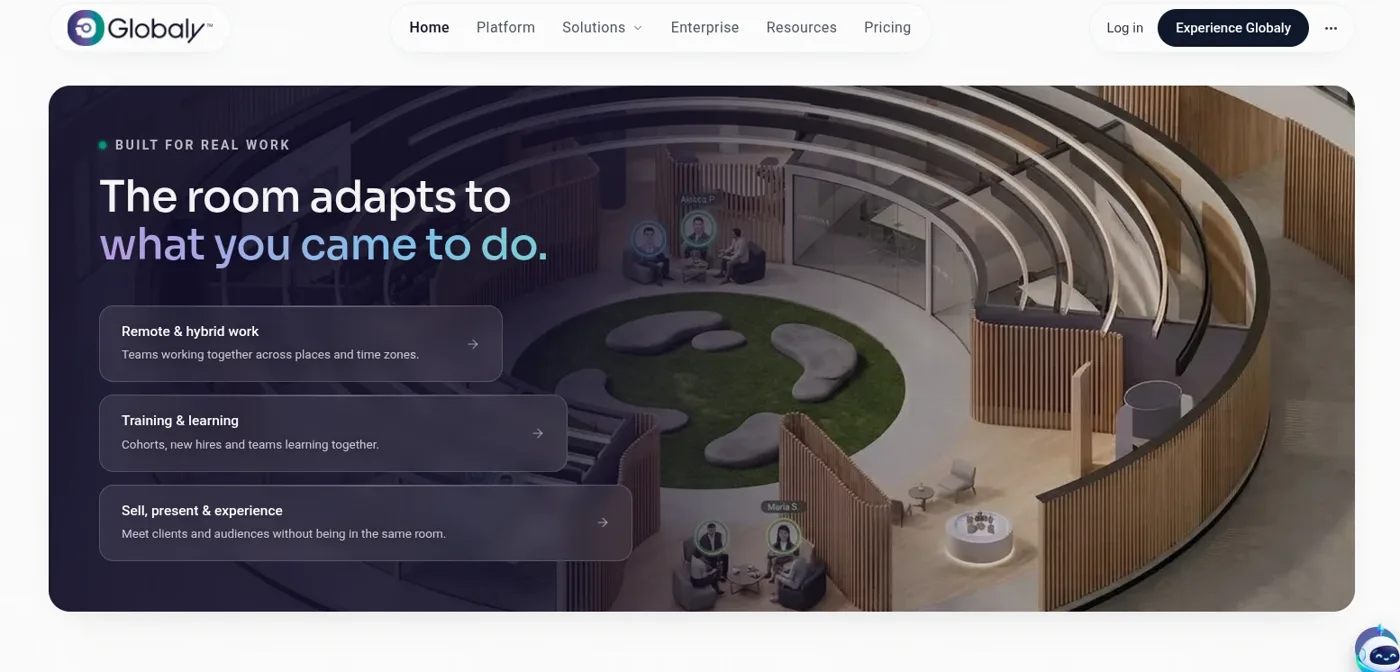
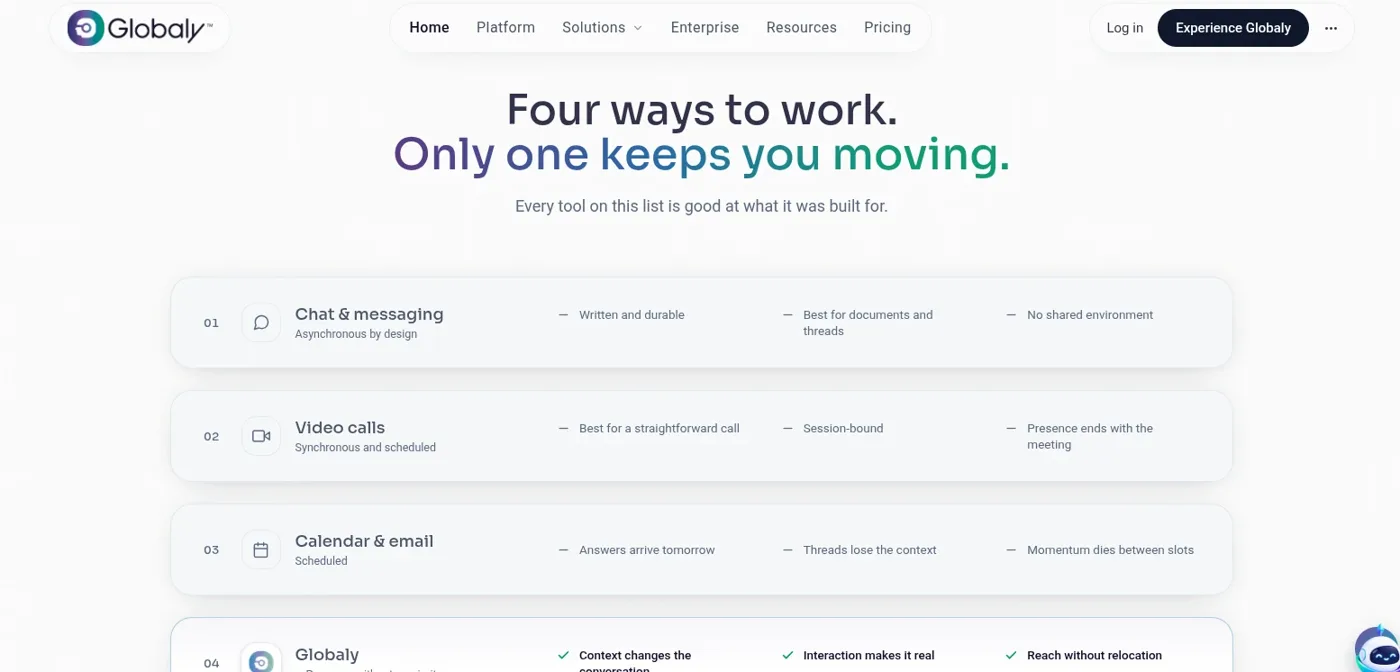
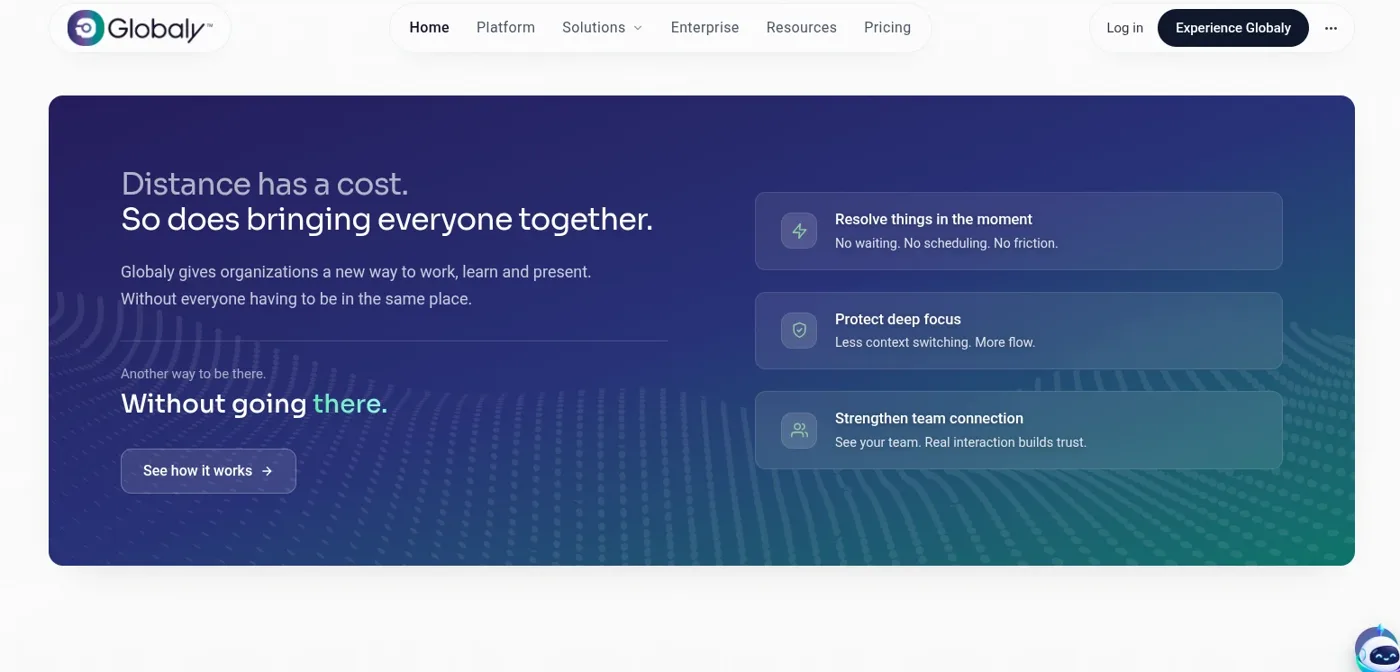
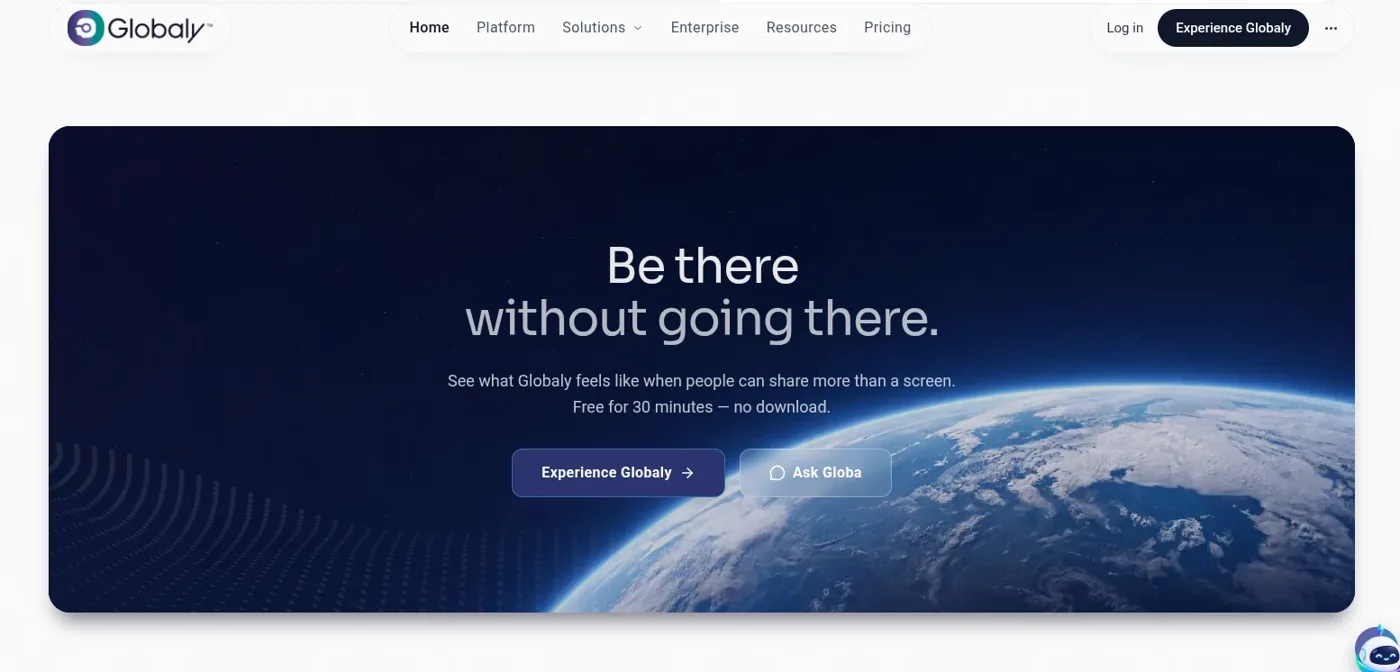
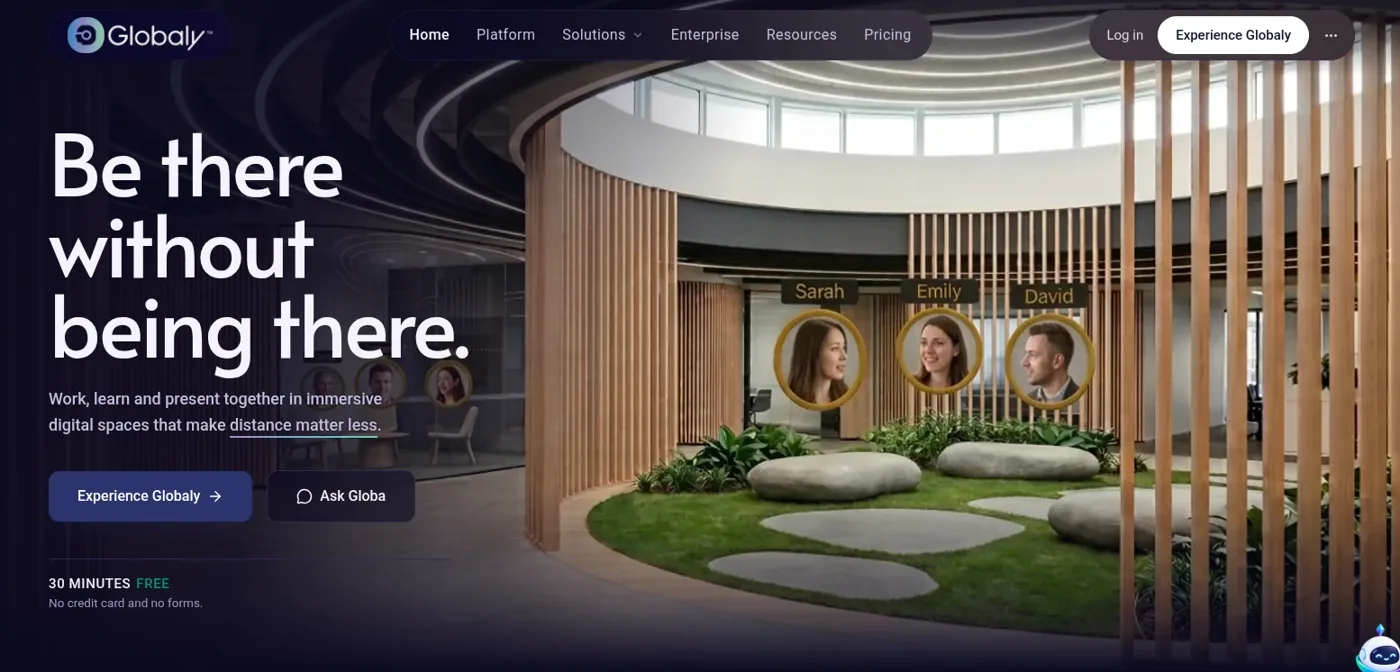
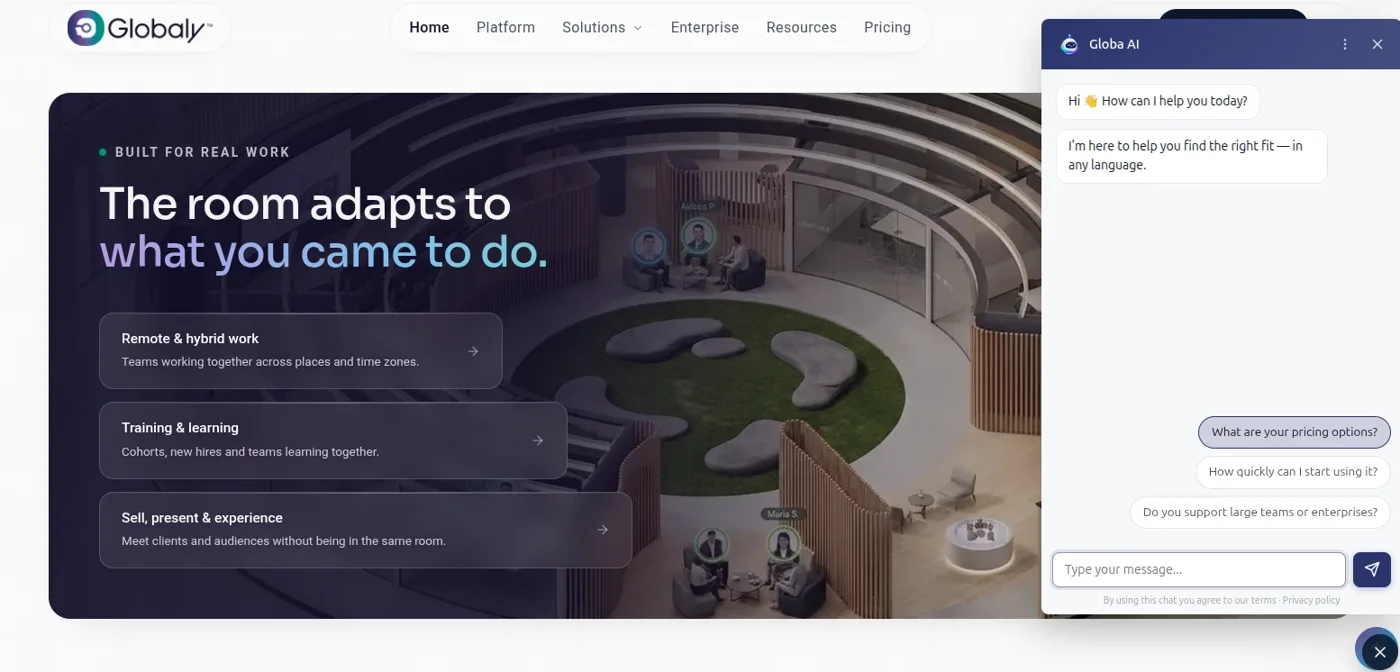
Immersive website for a collaboration platform, with a real-time interactive 3D office, avatars, conversations and spatial audio. It includes 33 pages in three languages, localized pricing, plan comparisons, an enterprise section and a CMS-managed blog.
Includes3D sceneSpatial audio3 languages
Overview
The challenge
Links
Private — client project
System architecture
A Next.js 16 App Router application rendered entirely on the server, with no database of its own. The central decision was to keep structural content in the repository — in typed i18n catalogues and TypeScript constants — and reserve the headless CMS strictly for high-cadence editorial content. That lets 33 pages be composed from a handful of section components parameterized by translation namespace, and lets navigation, pricing, the comparison matrix and the JSON-LD all derive from a single source in code, versioned and reviewable in a pull request.
Application Architecture
- Next.js 16 App Router with React Server Components; client components are limited to concrete interaction — menus, theme toggle, forms and scroll observers.
- A locale segment with middleware resolving language by cookie, with no prefix in the URL.
- Section pages built as reusable components parameterized by namespace, so a new solution page is a roughly 20-line file plus a translation block.
- Dynamic routes with static params for the comparison pages; article detail renders dynamically because it depends on the live CMS.
- Roughly 13,200 lines of TypeScript across 53 components and 33 pages.
Platform Features
- Five pricing plans with currency resolved by geolocation on the server and formatted per locale.
- Blog with search, category filtering, pagination and incremental loading, served through an internal API proxy over the CMS.
- Four comparison pages generated from a typed catalogue carrying a fact-verification stamp.
- Contact and newsletter forms validated with Zod and dispatched through Postmark with a double send — confirmation to the user plus internal notification.
- Flash-free light and dark theming, a choreographed server-rendered intro overlay, a route progress indicator, and reduced-motion support honoured across 19 distinct style blocks.
Data Model
- No database of its own — the data model is the contract with the CMS, typed in a dedicated module.
- A raw CMS article shape carrying author, category, tags, SEO fields, localizations and scheduling, mapped by an explicit function into an app-level post type.
- Multi-tenancy on the CMS side: the instance is shared across studio projects and every query filters by project slug. The site is a tenant, not the owner of the CMS.
- Environment separation: published articles are read in production and drafts outside it, derived from the environment flag.
Authentication
The site does not authenticate users: login is an outbound link to the product domain, and the primary call to action opens a demo room with no signup form in front of it. The only credential in the system is the CMS service token, and it is optional by design.
- No own auth
- External login
- Signup-free demo
- Optional CMS token
- No sessions
- No roles
Infrastructure & deployment
Deployed to the studio's own VPS over SSH behind Cloudflare rather than to a managed platform — a choice that conditions real code, since the middleware reads four possible geo headers precisely because it cannot assume a single provider's.
Containers & Build
- Multi-stage Dockerfile on node:21-alpine with development and production targets, selected from the environment in compose.
- Healthcheck every 30 seconds with an initial grace period.
- Public environment variables declared as build args, because the framework inlines them at build time rather than reading them at runtime.
- The production build runs without cache deliberately.
CI/CD
- Bitbucket Pipelines with four deployment environments pointing at three distinct hosts: production, production alpha, and two staging branches.
- Each step pipes a deploy script over SSH to the corresponding deployer account.
- No credentials in the repository — the deploy script receives its arguments from deployment variables and writes the environment file on the server at each deploy, removing the previous one.
- The analytics measurement ID is configured only in production, so staging deploys with an empty value and the analytics component renders nothing rather than measuring against the real property.
Host & Delivery
- Non-production deploys automatically point at the development chat widget, derived from the environment flag rather than adding another pipeline argument.
- The deploy script prunes volumes, images and builder cache before each build, creates directories and fixes ownership idempotently, and hard-resets the checkout so it is deterministic.
- Hero media served immutable with versioned URLs; general assets get a day of freshness plus a week of stale-while-revalidate so a same-name replacement propagates on its own.
- Legacy URLs permanently redirected to the approved information architecture.
Built with
A complete three-language marketing and content site delivered with its deploy infrastructure, its structured-data layer and its editorial content system connected.
Application Surfaces
- 33 pages: home; platform and device compatibility; seven solution pages; three company-segment pages; enterprise, trust centre and data residency; integrations; pricing; a comparison hub with four competitor pages; a resources hub with article detail; guides, an ROI hub with two case calculators and a proof-of-value guide; research; about; contact; video; privacy and terms.
- Navigation with grouped menus, responsive overflow, mobile menu, language switcher in navbar and footer, section nav with scroll-spy, theme toggle, scroll-to-top and route progress.
- A Tailwind v4 design system with light and dark theme tokens, four self-hosted type families, and roughly 1,970 lines of animation and layout CSS with reduced-motion support.
Integrations
- Headless CMS with an internal API proxy, typed mapping and graceful degradation to an empty state.
- Postmark transactional email with an explicit mock mode when the token is missing, logging instead of breaking in local and preview environments.
- Conditionally-mounted analytics, and a third-party chat widget in Shadow DOM with an environment-switchable host.
Documentation & Internal Tooling
- A three-document SEO, answer-engine and generative-engine system covering doctrine, application and process, plus a prompt library, an application report and a schema audit.
- Explicit anti-hallucination rules and an evidence-tagging scheme distinguishing observed, inferred, assumed and recommended claims.
- Art-direction material including hero plate originals and layout candidates.
- The code itself functions as decision documentation: comments cite the client brief sections that justify each information-architecture, copy and call-to-action choice.